Monday, March 9, 2009

Phuket, Thailand

In addition to providing the opportunity to explore the region and enjoy some general downtime, my periodic forays away from KL also give me the chance to renew my visa and to shop at the duty-free stores. As expensive as liquor is here in the city, the option of buying duty-free is always welcomed. For example, a 750-mL bottle of regular Absolut vodka costs around RM125 here in town (roughly US$34). At the duty-free shop, however, a 1-L bottle, which is 33% more vodka, is only RM56 (US$15). By volume, the 1-L bottle in KL would cost about RM167 (US$45), a staggering 300% increase in price over the duty-free shop. It pretty much goes without saying that I’ll never buy imported liquor at any other place outside the airport.
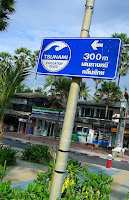
So this time I was off to the island of Phuket, a short hour-long flight from KL. It’s the largest island in Thailand, roughly the size of Singapore and a globally known hotspot for tourism. Phuket lies in the Andaman Sea off Thailand’s southwest coast and was one of many areas devastated by the Indian Ocean tsunami. It’s hard to believe that was over four years ago… seems much more recent to me. Malaysia’s immensely popular low-cost airline, Air Asia, had a promotion back in December (I was in Bali at the time) called “Get your Baht to Thailand” (baht is the unit of currency there) and gave away 100,000 free seats and I happened to get one, having to pay only the airport taxes and fees. So it was an incredibly cheap flight, even by SE Asia standards, about US$38 round-trip. Since I had never been to Phuket before (indeed, it was my first time anywhere in Thailand), I chose to stay in a very touristy area. Since it was only a two-night trip, I figured that even if it was not that great a place, I could handle it. So after a bit of researching online, I picked Patong Beach, probably the most-developed beach on the island.

My outbound flight was at the ungodly hour of 7:10 a.m., so I had to be up at around 4 to get a cab to KL Sentral (note the phonetic spelling), the main train station in the city, where I caught the 5 a.m. SkyBus to the airport, a solid hour away. Even at 6 a.m., the airport was completely packed. It was, in fact, the most crowded I’ve ever seen the low-cost terminal. We took off right at sunrise – look at that gorgeous sky – and flew north for an hour and ten minutes and landed in Phuket. Since Thailand is an hour behind Malaysia, despite being directly north, even with the lengthy taxi ride from the airport to my hotel, I was there by 8:30 a.m. I stayed in a guesthouse near the beach and it was really quite nice… the room was huge and had plenty of amenities like a kitchenette with sink, fridge, hot water kettle, microwave, and dishes. There was also a TV and DVD player, a big king-size bed, a nice bathroom, and free Wi-Fi. It ran about US$24 per night, a typical SE Asian bargain for accommodation.

Obviously one of the great delights of any trip to Thailand is the food. Even in landlocked Denver, ten thousand miles from this relatively obscure country, Thai restaurants are popular and easy to find. My first meal there, however, was a footlong Italian sub from Subway. Ha ha… I felt nothing but shame, but I couldn’t help myself. I haven’t had a proper sub sandwich in months and there it was, beckoning me. I redeemed myself by having delicious authentic Thai meals for the rest of the trip, but at that point, I just had to get a hold of a spicy toasted sub. We have Subways here in KL, but not many, and none are especially convenient to where I live. In Patong Beach (a street scene is pictured here), I saw four without even looking for them. Subway is clearly the top U.S. import there – by contrast I saw only one each of Burger King, Starbucks, McDonald’s, and KFC. Here in Malaysia, you can scarcely open your car door without hitting one of those four places. Check out this offering stand for the gods (you'll need to click on the picture to enlarge it)… I guess even a deity benefits from a straw. I thought that was kind of amusing how all the beverages left for the gods had straws.

So here’s the beach. It wasn’t the greatest, but it was nice enough and the water was clean and warm. The only really disgusting thing was the tourists, and I can’t overstate this. It was like a mass of great, pink, hairless walruses had washed up on the beach. Now, we Americans are routinely (and justifiably) derided and mocked by the rest of the world for being fat and slovenly. In fact, I’m told in Europe there are two kinds of “fat” – there’s “fat,” then there’s “American fat.” When I eat out at a place like Chili’s here with my friends, and we’re tucking into burgers and fajitas and a spicy, greasy queso dip, I’m queried, “Is this what food is like in your country?”

When I reply that yes, this is a pretty typical example of American food, the response is, “My god, no wonder Americans are so fat. This is so delicious!” I can’t even pretend to be insulted by this, either, because it’s true. However, there wasn’t an American in sight in Phuket. It was a bunch of fat—and I mean American fat for some of them—Europeans in every direction I looked. I could tell because these bags of blubber were shamelessly shoehorned into the typical Euro-skimpy Speedos (for the men) and bikini-type things (for the women). That is very much a European convention. Go to an American beach and tiny little Speedos for the men are the exception, not the rule, and women generally know better than to put on a bikini if they really can’t work it. Seriously, it was an awful, awful sight to behold. Do I need to paint a picture? Just imagine a 50-something man, about 5’9” and 275 lbs. (that’s 175cm and 125kg for my metric readers) and sunburned, flailing about in a lounge chair, wearing little more than a thong. I almost had to gouge my eyes out. Phuket, I’m told, is an immensely popular destination for Europeans, and indeed, I met people from Germany, the UK, Finland, and the Netherlands in my brief stay. So anyway, following that eyeful of unpleasantness, I vowed no more visits to the beach. It really was that bad and I’ll certainly remember those horror-stricken moments on the beach, surrounded by fat Europeans, the next time anyone has a go at Americans for being so fat. It’s a shame which, clearly, we don’t bear alone.

Since the beach I was at was seriously overrun with umbrellas, lounge chairs, and a hundred pink elephant seals in Speedos, I decided to book a snorkeling trip to some of the offshore islands. If you’ve ever seen the Leonardo DiCaprio movie The Beach, you’ve seen some of these islands. They’re spectacular. One small island gained so much exposure and fame from an appearance in an old 007 movie, it’s now actually called “James Bond Island.” The one featured in The Beach is Ko Phi Phi, which I assumed was pronounced “fee fee” until I realized that Phuket is “Poo-ket,” which means this poor island has the most unfortunate name of “Pee Pee Island.” I chose not to go there or to Bond Island because of their incredible popularity. I picked a six-hour tour that went to three islands in the Khai island group, Khai Nai (ky ny... how now, brown cow?), Khai Nui, and Khai Nok. The price was really cheap, only 800 baht, which is roughly US$22. It included round-trip transfers from the hotel, the equipment (mask, snorkel, life jacket), lunch, bottled water, soft drinks, fresh fruits on the beach, and a so-called “English speaking guide” which turned out to be a real stretch of advertising. Our guides were great, though. We got on a big speedboat and left from the marina on Siray Island, which was right off the southeast coast of Phuket (itself an island) and headed across the sea to still more islands. The water at the first island wasn’t that clear since the sand was being churned around by the rough seas.

At the second island, however, we disembarked on the white sandy beach and had lunch (crab salad sandwiches) and fresh fruits, witnessed yet another wanton display of lardtastic tourists roasting their flab on the beach, then went snorkeling in the shallow waters of the Andaman Sea. The water was warm and clear and inundated with thousands of colorful, tropical fishes. About six species seemed to proliferate, including the beautiful lunare wrasse, but every now and then, I’d see an odd larger fish near the rock outcroppings. What struck me, even then, was the total absence of any invertebrates. No corals, no crustaceans, no starfish, no anemones, no urchins… just fish, and oodles of them. I learned quickly that, if I stayed relatively still in the water, they would swarm around me in no time, which was really cool, and if I stayed still much longer, they’d check to see if I was something edible, which was not quite as cool. I picked up a disposable underwater camera in Patong, but the pictures from those cameras are rarely spectacular. Nevertheless, here are a couple of underwater shots. Look, it’s me snorkeling! I also managed to cut my ankle on one of the rocks. Coral cuts can be nasty, since there are many bacteria in the sea with which our bodies are not familiar. This wasn’t a coral, and the lacerations weren’t deep, but it was still pretty painful, particularly on that spot near the ankle bone. Two days later, back in KL, it still hurt, but I’ve been putting antiseptic cream on it and taking a broad-spectrum antibiotic just as a precautionary measure.

We headed on to the third and final island which is where I got some of the best shots (above-water), I think. One in particular really stood out… the clarity of the water, the juxtaposition of the white sand and the craggy, black rocks, the many different shades of blue. There weren’t nearly as many people on this island, so the snorkeling was even more enjoyable. Although the water itself was clear, visibility was limited in the shallowest waters because of turbidity… beyond about two meters, it all became quite hazy and indistinct. Take a look at this picture, and though the water is what really takes center stage, note the swelling clouds overhead. About two minutes before our scheduled departure time, our guide indicated that it was time to go… now. A quick look to the east drove the point home: a massive thunderstorm was approaching and even as we hastily boarded the speedboat, we watched the storm consume the small island just to our east. One minute it was there, the next, it was lost from view, obliterated by the sheets of rain connecting the vast cloud to the sea below. So we took off, speeding across the water, propelled by twin 200-HP V6 engines at wide-open throttle. And the storm gave chase… it was thrilling and brought back clear memories of racing across Mobile Bay as a young boy, riding in a boat driven by my dad as a ferocious thunderstorm enveloped us. We were a bit more fortunate this time: We had fled Khai Nok island in just the nick of time. As we sped across the warm Andaman Sea, the small island we had just left was lashed by the heavy rain, disappearing before our eyes. We were outrunning the storm, but only just. We got back to the harbor of Siray Island and disembarked. Literally seconds after I got in the van and closed the door, the squall front hit the marina with amazing force. Chairs and umbrellas and debris were scattered and the people on the docks turned away from the sudden burst of wind as everything in its path was sandblasted. Everyone in our party got in the van, wiping their eyes, and we set off for the long ride back to the west coast of Phuket. Before we even crossed the short bridge connecting Siray Island to Phuket, the first bands of rain hit. Not too many times in my life have I seen such torrential rain. It came in spectacular driving sheets; a true tropical thunderstorm. From my seat, I watched the scenes unfold as they paraded past my window: bicyclists and motorcyclists braving the storm, great rivers of water gushing off roofs, people setting out huge buckets and drums to collect the rainwater, dogs huddling under overhangs. We crept along and after awhile, the rain subsided. By the time I was dropped off at my guesthouse in Patong Beach, the rain had almost completely stopped.

And those are really the highlights of Phuket. The food was great and the snorkeling was really fun. I got a little sunburned on my shoulders and neck, but not bad at all. I was once again reminded of how connected to the ocean I am. Maybe it’s because I was born under a water sign (Pisces) or maybe it’s because I was born and raised near the sea, but I always feel very “at home” when I’m near the water. Odd that I wound up living in Colorado, isn’t it? I’m reminded of that old Little River Band song, “Cool Change” with the lyrics, “I was born in the sign of water, and it’s there that I feel my best. The albatross and the whales, they are my brothers.” Some of the lines in that song could almost be an anthem for so many of our lives... talking about how our lives seem pre-arranged and how refreshing change can be (paraphrased, of course).

Back in KL, an enormous amount of heavy rain for a few hours on Tuesday afternoon caused some pretty serious localized flooding in the city. As a result, the normally 20-minute ride home from KL Sentral took nearly three hours. These are a couple of shots from the local press. It was a muddy mess, but had all drained off by later that night, leaving a bunch of soaked cars behind. And that’s about all… I’ll close it out with the photos and try to write again soon!

Also, for those of you old enough to remember the song I mentioned, I've included a nice video of dolphins and whales swimming and jumping in the open ocean set to the song. Enjoy!


Tuesday, February 24, 2009

Live Deliberately

So I got five cards in the mail for Christmas, but have already gotten eight for my impending birthday, and another seven via e-mail. I can only assume that means my birthday is more important than Jesus's. Right? Yeah, yeah, just kidding.

I told one of my friends here that, technically, my birthday doesn't occur until February 25th at 12:04 p.m. Central Standard Time, which is February 26th at 2:04 a.m. here in KL. I'm going to wring every last second I can out of my 30s.

Interestingly, the only time in my life so far that I have fibbed about my age was in the months after I turned 30. I definitely didn't handle that one with much aplomb or grace. It was so well-known, in fact, that I got three cards the following year wishing me a happy second anniversary of my 29th birthday or something. Not this time... I will wear "40" like a badge of honor, especially since I'm lucky enough to not look my age. I've said many times that getting older definitely beats the only other alternative.

In what is surely a curious coincidence, the change to each new decade of my adult life has been marked by something relatively significant. When I was 20, I moved to Denver from Montgomery, Alabama... a major, major turning point in my life. When I turned 30, I had just moved into my first actual house, and now that I'm turning 40, I find myself living in Malaysia, of all places.

It's a fascinating truism about people—we really can't imagine ourselves at much different points in our lives than where we're at currently, give or take a few years. On the cusp of 40, I can barely remember what I was like as a 19-year-old. And most 19-year-olds figure they'll be long dead before reaching the preposterously old age of 50. Seriously, ask any teenager, "What do you think you'll be like when you're 50 years old?" They can't imagine it. Even at 39.945, I can't really picture myself as a 50-year-old. In our minds, "old" is always at least 15-20 years older than WE currently are, isn't it?

I can't deny, however, that on a couple of occasions in the past week or so, it hasn't escaped my attention that, in all statistical likelihood, even if I live out a fully normal lifespan with no unexpectedly early demise, that my life is half over. I don't, however, mourn this or find it depressing at all. I've been fortunate in this life—not as much so as some, but infinitely more so than many, many others—and I must admit that as I've gotten older, in almost all respects, the tapestry of my life has grown richer and deeper, and my life has largely been better for it. I was pretty happy and things were quite good when I was 23, but in almost every meaningful way, my life is better now. The inexorable accumulation of ups and downs, experiences and feelings, and high points and low points all just serve to enrich the human condition. This gives me hope that the second half of my life will be even better than the first half!

I suppose it's only natural for such milestones to be a time for reflection on one's life. As I was making the decision to move to Malaysia, I was repeatedly asked, "Why?" And the reason was twofold. Primarily it was the desire to live in and experience life in a different country and culture that prompted the move. But beyond that, it was wanting not to get to the end of my life, only to look back with questions and regret, wondering what may have been. To this day, I name as two of the most influential writers in my life the 19th century American transcendentalists, Ralph Waldo Emerson and Henry David Thoreau. Two of their essays, "Life Without Principle" (Thoreau) and "Self-Reliance" (Emerson) were incredibly impactful. However, one of Thoreau's most-quoted passages, in abbreviated form, is from his seminal work, Walden, written while he was spending a year in relative isolation on Walden Pond. It aptly and eloquently sums up the underlying reason for why I do many of the things I do, even if I'm not living a Spartan-like existence alone in the forest.

"I went to the woods because I wished to live deliberately, to front only the essential facts of life, and see if I could not learn what it had to teach, and not, when I came to die, discover that I had not lived."

Friday, February 13, 2009

Continuances and Remembrances

One thing I neglected to mention about the Canopy Walk was the amazing absence of any warnings, disclaimers, prohibitions, or pretty much anything apart from a sign letting you know that good ol’ German engineering was responsible for the design and installation of the rope bridges. In the preposterously litigious United States, anyone undertaking such a walk would be beaten into submission by a blizzard of signs and legalese. No pregnant women! No one under the age of 12! Must be “this tall” to participate! No people suffering from hypertension, lower back pain, acrophobia, or wildly untrimmed toenails! Don’t blame us if you fall off or the rope snaps clean in two. Walking on a chintzy rope bridge twenty stories above the ground is an inherently risky activity! So sign here, initial here, waive all rights here, and off you go. Here in Malaysia, it’s more like, “Got five ringgit in your pocket? There’s the bridge. Have fun… and enjoy being lost in the jungle when it’s over.”

So in addition to the things I’ve already mentioned, we also just did what I would consider basic, entry-level tourist stuff in KL… things I’d take any visitor to do. We took the monorail to Bukit Bintang, a very high-energy part of town right in the heart of the city. It’s really akin to New York’s Times Square… just always bustling with activity, vendors, hawkers, street musicians, and such. There are loads of sidewalk cafés and food stalls around, but the real treat for foodies is one street over on Jalan Alor. There, hawkers serve up a wide variety of food all day and night. I took Matt to one of my favorite places there where we had the “steamboat” dinner. A large pot, almost like a broth fondue, is set up on a burner at your table, connected to a large liquid propane tank that’s set directly by your table. Can you even imagine this happening in the U.S.? No… you cannot (see legal section above). The pot is bisected by a little barrier, and half the broth is spicy, the other half regular. A big plate of food is served alongside the pot, and you just throw it in and cook a bit at a time and eat… you get chunks of boneless chicken meat, fresh enokitake and oyster mushrooms, tofu, shrimp, little fish cakes, crab sticks, squid, octopus, eggs, and more, plus a plate full of Asian greens (pak choy, bok choy, etc.) and some noodles and peppers and sauces. It’s a mountain of food, and I love it. The only thing I wasn’t especially fond of was the octopus… bit too chewy and rubbery for my liking, but everything else was delicious. It only costs about $5 per person, and seems quite healthy, too. It’s probably not for everyone, but I always love a good steamboat meal. Matt really liked it, too.

After that, we went to one of my favorite malls here, the very upscale Starhill Gallery. I like it because, unlike the other high-end malls in KL, it’s kind of dark and classy, whereas the other malls are big and bright and open. In the middle of Starhill Gallery, there’s a nice atrium with great lighting and lots of greenery and water, including a bar surrounded by a big water feature “pond.” We sat at the bar and had a couple of drinks, talked with the bartender, and listened to live music from the jazz combo. It was great. The bartender was eager to show off the wine list, too, especially the 3-liter magnum of vintage Bordeaux (a Chateau Lafite Rothschild, I believe) for the eye-popping price of RM145,000… about $40,000. Needless to say, we just stuck with our 20-ringgit Scotches and gins, thanks very much.

We also visited the Skybridge, the 750-ton, 190-foot-long, double-decker bridge connecting the twin Petronas Towers at their 41st and 42nd floors. I have a friend who works for the Petronas Company, so he got us tickets to visit. (The tickets are free, but they’re issued each day on a first-come-first-served basis, and only a limited number are issued each day.) Here’s a shot of KLCC Park that was mentioned in the previous entry. You can see the Bellagio-like fountain in the lake in the foreground with the KL Convention Center behind it. It’s a shame you can’t go higher in the towers, but being 560 feet above street level still affords some pretty impressive views. For seriously breathtaking views, there’s always KL Tower, the nearly 1,400-foot tall communications and observation tower (fifth-tallest in the world), and it has an observation deck and revolving restaurant over 900 feet above ground level.

The day before Matt left KL, we went to the Kuala Gandah elephant conservation center about 75 km (45 miles) east-northeast of the city in the state of Pahang. The highway, which goes all the way to Peninsular Malaysia’s east coast, took us over some very hilly terrain… what might be called the peninsula’s “continental divide” of sorts. Once we got to the center, we signed in, got our visitors’ badges, and headed down to the river where the handlers had several adult elephants in the water.

Contrary to the way elephants have long been portrayed in Western literature, the reality is that these creatures—the largest land animal on Earth—can be incredibly dangerous. Standing next to the largest one there, a 37-year-old male, it was sobering to imagine such a massive animal on a full-blown rampage… and the elephants here are Asian elephants (obviously), not their even-larger African counterparts. Fortunately, these elephants appeared to be very docile, clearly having adapted to their relatively comfortable life and human caretakers. There’s no denying elephants’ intelligence and legendary memory, so they’re fairly receptive to learning routines and desired behaviors and it was fascinating to see them respond to commands and prompts.

After playing with them in the river and getting them all clean, the handlers rode the seven elephants to a pair of long pavilions nearby where we could feed them from piles of fresh fruits and vegetables. I had never touched an elephant before, so it was truly remarkable. The trunk of an elephant, which is strong enough to push over a small tree, is also dexterous enough to pick up a paper clip. It’s incredibly sensitive, too. The first elephant I fed explored with the tip of its trunk, searching for the chunk of papaya I had in my hand. The skin on the tip of the trunk was surprisingly soft, and the animal was very gentle, but clearly hungry! The one I fed first was a 9-year-old female. After that, I went over to an 11-year-old male and fed him and “petted” his enormous head (more like the left side of his face, really). Asian elephants have smaller ears than Africans, and are notably hairier, too – a thin coat of very coarse, dark hair peppers their skin. It really was just a terrific experience, and it’s all free, too. The conservation center does virtually no advertising that I’m aware of and it’s not even publicized. Indeed, three of my local friends here to whom I mentioned the center were completely unaware of its existence. It’s probably a good thing: with any real publicity, the place would probably just be overrun with people.

Once the pachyderms were all fed, people were invited to ride them (the biggest males could easily hold five people) and then swim in the river with them. Two orphaned babies were brought out, too, each about the size of a horse, and they played in the river as well, swimming, rolling over in the water, sticking their chunky feet up in the air… it was such an entertaining and fascinating way to spend the afternoon. I got to feed some fruit to one of the calves after they emerged from the water. One of my favorite things about the baby elephants was the way they could take a thick stalk of sugar cane and just crush it with ease, making this loud SNAP. I’ll definitely go back there again… and will take a change of clothes so I can go swimming with the elephants. We didn’t do it this time, because we were in jeans and didn’t want to drive back to KL a muddy, wet mess.

On the way back to the city, we stopped at a roadside fruit stand where one guy was selling jackfruit and another was selling durian (pictured). A Chinese family were at the durian stand, partaking of the fruit and chatting amiably with the vendor. They invited us to have some of the fruit, and both Matt and I eagerly accepted. I have been wanting to try durian for awhile, but didn’t want to buy a whole fruit since it’s not only a large amount, but is also quite expensive, especially for the most popular cultivars (there are different strains of durian and everyone seems to have their favorite). This was the D24 cultivar, among the most prized from what I understand. I snapped a picture of the fruit in my hand… it looks like a yellow heart, doesn’t it? The thing is, durian isn’t firm or crisp in the least. A very thin fibrous layer (completely edible and virtually unnoticeable when you’re eating it) covers the essence of the fruit: a creamy, custard-like flesh. If you can imagine a slightly thicker version of vanilla pudding, that’s about the consistency of fresh durian. I failed to warn Matt about this and he bit into his like it was an apple. Ha ha… what a mess. And what about the taste? Well, I rather liked it, which I’m told is unusual for Westerners on their first try… seems like that for white folks, it’s very much an acquired taste. But Matt and I both really enjoyed it. For Matt, it was a pretty fruit-tastic week here, because he got to sample five fruits that were new to him: durian, rambutan, jackfruit, mangosteen, and dragonfruit.

The taste of durian is really difficult to describe, but that hasn’t stopped people from trying. One oft-quoted description is from the noted naturalist, Alfred Wallace, who wrote, “The five cells are silky-white within, and are filled with a mass of firm, cream-colored pulp, containing about three seeds each. This pulp is the edible part, and its consistence and flavor are indescribable. A rich custard highly flavored with almonds gives the best general idea of it, but there are occasional wafts of flavor that call to mind cream-cheese, onion-sauce, sherry-wine, and other incongruous dishes. Then there is a rich glutinous smoothness in the pulp which nothing else possesses, but which adds to its delicacy. It is neither acid nor sweet nor juicy; yet it wants neither of these qualities, for it is in itself perfect. It produces no nausea or other bad effect, and the more you eat of it the less you feel inclined to stop. In fact, to eat durians is a new sensation worth a voyage to the East to experience. ... as producing a food of the most exquisite flavor it is unsurpassed.” I love that he declares the flavor indescribable… and then proceeds to describe it. Awesome.

Matt and I also got some jackfruit, which is, I believe, the largest tree-borne fruit in the world. The individual fruit can reach massive proportions, considerably larger and heavier than a watermelon. Workers often wear hardhats when harvesting the fruit. A 60-pound jackfruit falling from a height of even 15-20 feet could do some serious damage! (Durian, which looks like a medieval weapon of some sort, and whose name is derived from the Malay word (duri) for “thorn,” is no slouch itself. Indeed, there are signs around 80-foot durian trees in the region advising wanderers not to linger, lest they be clobbered by a falling durian.) Although it’s not an extraordinarily flavorful fruit, I eat jackfruit on a semi-regular basis, and the unofficial regional dish of Yogyakarta, Indonesia is a delicious jackfruit curry called gudeg, something I had there on my first visit back in 2006.

The Chinese family who were kind enough to share their durian with us further educated us on some of the methods and traditions of enjoying durian. First, durian must not be paired with alcoholic beverages or a terrible feeling of sickness will follow. (I must add that, although I didn’t feel sick, I felt weird for several hours after eating the durian… as if I was sweating from the inside... and this was all without the benefit of alcohol!) Second, durian is considered a “warming” fruit, and, as I discovered, it does at least seem to elevate one’s core body temperature… it’s a curious sensation. Many people counter this by eating mangosteen afterwards, which is a “cooling” fruit. Oddly enough, durian and mangosteen are called the king and queen of fruits, respectively, and it seems only fitting that they should be paired this way for eating. If no mangosteen is available, you can pour cool water into the husk of the durian, the inside of which is clean and shiny white, and drink the water from the husk. This supposedly “cools” the body and prevents “durian sore throat,” but only if you drink from the husk. Nobody has ever accused the Chinese of being short on traditions and remedies. So we all stood in a circle, passing a bottle of water around, drinking from the spent husks of the king of fruits.

Half an hour later, we were driving along and the air was suddenly filled with the noxious, overpowering stench of durian. I looked at Matt, with this “What the hell?” expression and he covered his mouth guiltily. Durian burps. I wasn’t affected as badly but for the rest of the drive home, every ten minutes or so, Matt would roll down the window a bit when he felt another burp coming out. Ah, the revenge of the durian! Only now do I understand the love-hate relationship people have with this fruit!

I have an upcoming "birthday trip" to the island of Phuket, Thailand in about two weeks, and about a month and a half after that, I’ll be taking a short flight up to Bangkok. I’m really excited because I literally have not heard a bad word about Thailand. Everyone I’ve talked to who has been there has had only positive things to tell me about it, so I hope it lives up to its reputation. I have a nine-day break coming up in about six weeks too (the Bangkok trip is the weekend after my break), so I have to figure out somewhere to go and something to do.


Finally, on a personal note, my dear old dog, Alex, died yesterday (February 11). I adopted him from the local shelter in Denver in early 1992 when he was just eight weeks old. And for 17 years—nearly all of my adult life to date—he was my good and faithful dog. He spent the last five months of his life being pampered and cared for by my mom, who considered him to be her “grandpuppy.” Here are some pictures of Alex, including one of him sound asleep in a big cardboard box, and one taken along with my parrot, Shiloh. Alex was never quite sure what to think of the bird, I believe, but he got along with her quite well, and never seemed jealous or bothered by her presence. For the most part, Alex was a good and gentle dog. He had started going downhill before I moved to Malaysia last September, but just kept soldiering on, despite two episodes where I drove him to the vet, thinking it was his time, only to have him “cured” of some malady and see him summarily spring back to life. My mom and her good friend Jane—along for emotional support—took him to the vet last week, similarly thinking it might well be his last trip to the vet, but were told Alex had pneumonia and pancreatitis, as well as another infection, all quite treatable. A few days later, however, he had a stroke, and couldn’t even get up anymore… so my mom took him to the vet and they put him to sleep.

I remember vividly the first time in my childhood that reading a book truly affected me. It was while I was reading the now-classic Charlotte’s Web, and late in the book, when Charlotte, a true friend to the very end, takes her final breath, the line that reduced me to a mess of blubbering tears (I was 10, mind you!) was quite possibly the saddest, most heart-wrenching line in children’s literature: “No one was with her when she died.” Alex suffered no such ignoble fate. My mom held him as he died and I’m so grateful for that. My true hope was that his time would come before I left the U.S., because being with him when he passed away should have been my burden. It wasn’t to be, though, so I feel truly fortunate to have a mother who was willing to bear that burden for me. Although dogs are often marginalized and overlooked here in Southeast Asia, many Americans can understand what it means to lose a loyal companion after 17 years of memories and good times. Pets are considered by many to be a very real part of the family, and their loss is felt quite keenly by those whose lives they touch. So long, sweet dog.


Tuesday, February 10, 2009

My First Visitor!

Gong Xi Fa Cai! We’ve just celebrated Chinese New Year here in KL (which lasts from the new moon to the next full moon), and it’s now The Year of the Ox. So that’s now two new year celebrations down, and one to go. I’ll be going to Bangkok in mid-April to celebrate at their annual Songkran festival, commemorating the new year according to the Dai calendar. Chinese New Year is a major holiday in Malaysia and, although the official public holiday is two days, many Chinese-owned shops and businesses close for the entire week, and some close for even longer.

So one of my friends, Matt, from Denver, who is currently living and working in Seoul, had some time off and wanted to visit (and escape the cold Korean winter for awhile), so he flew down to KL and spent the week here. He arrived on the eve of the lunar new year, which is almost like visiting an American city and arriving on Christmas Eve. The following day, nearly everything was closed, so we decided to go to Batu Caves which is just north of KL proper and very much still in the greater KL area. Batu Caves is a massive limestone formation containing a series of caves. The largest of these caves has a ceiling over 300 feet high. Apart from its geological interest, Batu Caves is also one of the largest Hindu shrines in the world and, every year, is the focal point for Hindus attending the Thaipusam festival, attracting over 1.5 million pilgrims annually. Thaipusam is actually today (February 9), the day I’m writing this, and is yet another in Malaysia’s enviably long list of public holidays.

There is a large, rather garish golden statue outside the main cave. Standing 130 feet tall, it’s the largest statue of Lord Murugan, a Hindu deity, in the world and was unveiled three years ago. Though it honestly looks a bit like injection-molded plastic that’s been spray-painted gold, it’s actually made of concrete, reinforced with over 250 tons of steel bars. Just to the left of the statue is a very steep flight of 272 steps which we climbed to reach the Cathedral Cave. We walked around and marveled at the cave itself as well as all the Hindu shrines. Since it was a public holiday, there were loads of Hindus there for ceremonies and such. All the color and activity made it a really neat experience and we even saw a large band of macaque monkeys on the way out. I’ve grown accustomed to seeing monkeys here (and on my many trips to Indonesia), and I’m not a huge fan of monkeys to begin with, so it was definitely more of a treat for Matt. I made a noise at one of the larger males as he passed by on the railing and he just bared his teeth and hissed at me. Nice.

We also went to KLCC Park, beneath the Petronas Twin Towers. Many visitors see only the lake and fountain display from the mall there, but the park itself is actually quite large, with jogging trails, sculptures, and wading pools. We set off with our cameras, wandered around, and enjoyed the crowds. Since it was a holiday, the park was full of people. The weather couldn’t have been any better… it was clear and sunny, but surprisingly not that hot.


The next day, we went to the Forest Research Institute of Malaysia, which is quite near to where I live. It’s a 1500-acre (600-hectare) site of rainforest that, while still a working research center, is much more popular with the locals as a place for day trips, hiking, picnicking, and exploring the jungle. We had a great time and the highlight was the Canopy Walk, a series of rope bridges suspended 200 feet above the ground through the canopy of the rainforest. It took a bit of time before I became comfortable walking on the thin planks that high above the ground, but it was a great experience, and from one of the bridges, we could see KL in the distance. We didn’t see any animals there apart from lizards (some quite large), but the flora was simply astounding in both its diversity and its scale. When given abundant rainfall and sunlight, plants can truly grow to immense size. We also found these plants that, when touched, immediately—and rapidly—folded up their leaves, presumably as a protective measure. After a few minutes, they would relax back into sunlight-collecting mode, but seeing a plant react that quickly to something was a treat to behold. Kind of like a trapless Venus flytrap plant. After doing the Canopy Walk, we got somewhat lost in the rainforest since, in true Malaysian fashion, there were absolutely no signs of any kind to direct us back to the proper place. To even get to the Canopy Walk, we had to hike uphill along a pretty long and challenging forest trail; it’s not like the Walk is just right there by the road. And after completing the series of bridges, you’re not at all in the same place you started. You come down from the final platform and there you are, alone in the jungle. There was a waterfall and something of a trail, so we followed that to a t-junction on a much more well-defined trail and chose what “felt” like the right way to go. So we wound up wandering the trails for awhile until it dawned on me that I had my GPS with me (as well as having GPS on my mobile phone), so we could at least see where we were relative to a road! That worked and it turned out we were heading in the right direction anyway, but it was nice to have it confirmed. As a result of our directional ineptitude, we got in an additional two miles of hiking without even meaning to. When we finally found the car and piled in, we emptied the bottled water, cranked on the A/C, and headed back home to recover!

I’ll continue with more adventures from Matt’s visit in the next entry… want to get this one posted and don’t want it to be too long. In addition to recounting my first experience eating durian, the next entry will include what was probably the highlight of the week: our visit to an elephant conservation center in the neighboring state of Pahang. At this place, people can get very up close and personal with as many as seven adult elephants and two calves.

Sunday, January 4, 2009

Penang and the Mango Incident

Sounds intriguing doesn't it? As any reader of the brilliant and sorely missed Calvin & Hobbes comic strip will remember, "the noodle incident" is something referred to a couple of times in the strip but never explained. The strip's creator, Bill Watterson, opined that it was sometimes better to leave things up to the imagination of the reader. I'll actually tell you about the mango incident later on, but it's not nearly as dramatic as the title of this entry might lead you to believe. I just liked the sound of it.

I took the picture above from Batu Ferringhi beach on the north coast of Penang. It actually looks quite nice, but the reality is, the beaches there are not Malaysia's best. You can't always believe what you see in photos! As for Penang, it is a Malaysian state, an island, and—colloquially—the name of the largest city on the island, as well. (The proper name is Georgetown.) The state of Penang extends to the mainland, but when anyone here says, "I'm going to Penang," they mean the island. Georgetown, named for England's King George back in Malaysia's colonial days, is not only the largest city on the island, but is indeed the second-largest city in the country. I was warned more than once before the trip, "If you think KL drivers are bad, just wait 'till you drive in Penang." It's about a 4.5-hour drive to reach the island, and it was a nice, leisurely drive with no unexpected surprises from my car. Always a good thing. The highway to Penang is a toll road, like most major highways in Malaysia, and the cumulative tolls were fairly expensive (about RM50 or about US$14), but I can't deny that the road is excellent. It's well-maintained, and nice R&R facilities are sprinkled along the route, too. At some, there are places to eat (mamak food stalls, mind you, not usually a proper restaurant), and at most, there are fruit and snack stands. We got fresh fruit on a couple of stops -- quite nice.

GPS navigation! Hooray! The island of Penang is connected to the mainland by a very long bridge, so I was pretty excited about driving across that. Wow... what a crashing disappointment that turned out to be. The main span, which is cable-stayed instead of the more aesthetically appealing suspension, is okay, but honestly, if there had been a single way at all to make one of the longest bridges in the entire world a complete bore, Malaysians found it. Moreover, they're actually expanding the bridge (from four lanes to six), which is a rather monumental task given its 8-mile length, so they have erected a corrugated tin barrier that all but eliminates any view that might have been present. Now bear in mind they've also started construction on a fantasically expensive second bridge—even longer—linking the island to the mainland, so it begs the question, why expand the existing bridge if you're going to build a whole new one nearby? Furthermore, this new RM3 to 4.5 billion bridge (depending on the source) is being constructed with only four lanes. Brilliant! No planning ahead here! If you live here for even a short time, as I have, things such as this will come as NO surprise. I can say without any fear of contradiction: there's not a whole lot of forethought that goes into transportation planning here. Roads are put in haphazardly, barriers are built at junctions (in lieu of traffic lights), forcing drivers to make lengthy detours and U-turns to go very short actual distances. Massive, dense condo blocks and office buildings are erected without a scrap of attention being paid to traffic studies or infrastructure improvement. There's a whole new development nearing completion in my neighborhood and absolutely nothing has been done to accommodate the increase in traffic that will doubtlessly occur. This is the same sort of myopic "planning" that allows one bridge to be expanded while a whole new one is being built a few miles away. Anyway, sorry for the diatribe. I really do like living in Malaysia, but it's not without its various oddities. Back to the story...

We stayed in a business-class hotel a bit south of Georgetown and the suite was massive. It wasn't opulent or plush, but it was nice and it was big... about 1,000 sq. ft., which is very large for a hotel room. My friends and I spent the first 15 minutes just walking around, looking in the bedroom, checking out the desk and office space, sitting at the dining room table, etc. There was a nice pool and gym onsite, too, and we got this place for RM150... a pretty good price, especially for the New Year holiday. I didn't include the picture of the "please don't cook pork in the oven" sticker on the microwave, but I had to post a picture of the "no durians" sign... it's not the first time I've seen such a sign. Durians are the black sheep of the fruit kingdom, I swear. Two things here whose smell is utterly unmistakable are shrimp paste and durian. Neither is particularly pleasant, and both can be smelled from quite a distance, and there is simply no mistaking their aromas. I've still yet to try fresh durian, but I'm sure I will one of these days. Even apart from the smell, it's an intimidating fruit. Once I take the plunge, I'll be sure to write about it.

The New Year's festivities were at the old colonial fort on the coast called Fort Cornwallis and the event was called "Rock the Fort 2009." We got to see some pretty good live music, and at midnight, of course, a great fireworks show. There were loads of people there, and we went went out for some good street food afterwards, so we didn't get back to the hotel until about 2:30 a.m.

The rest of the trip was fairly straightforward... exploring, going to the beach, checking out the colonial architecture, sampling food, driving around, taking pictures, sleeping late. On the day we left the island, we got caught up in a terrible traffic jam and had the worst meal of the trip on top of that, so we left the hotel at noon, but didn't get off the island until nearly 4:00. Not a particularly good way to wrap up the vacation, but it was the only time we really got snarled up in any memorably bad traffic.


The drive back to KL was not quite as pleasant as the drive to Penang. First, we got to drive through a torrential downpour for a good long time—probably a solid half-hour of sheets of rain falling from the clouds. And then, shortly after nightfall, we were driving along and probably only 25 miles from KL and the traffic just ground to a stop, then proceeded to just barely crawl along. On and on this went, in the rain (which wasn't as heavy by then) for over 40 minutes. We kept thinking it was a police roadblock or something, maybe an accident... but when we finally got to the point where we could see what was actually causing all the mayhem and despair, it was funny and a bit anticlimactic. Mangos. Hundreds of them, all over the road. A truck had lost its load (it was pulled over a bit further on), and crates of mangos were scattered everywhere. Even at the time, it was pretty amusing that after all that delay and drama, it all turned out to be the fault of a bunch of rogue mangos.


So that's the Penang trip. It wasn't spectacular, but it was quite enjoyable, and I'm happy I got to go. In Malaysia, a five-hour drive is considered a "long way," so I'm glad I was able to do it and experience a real road trip here and not have it end with me riding home in a tow truck or having things fall out from under my car on the roadway.

Since returning to work on January 6th, after a wonderful 3 1/2-week holiday break, I've been incredibly busy, so that's why I haven't updated the blog in nearly three weeks' time. (You'll note that the entry date is January 4th, which is when I started writing it, so I didn't ignore it completely... it just took awhile to complete!) I'll try to do better here soon! One of the students I tutor was desperately trying to get numerous essays completed for applications to American colleges and the other student I tutor just started his first semester at a prestigious international school here, so between that and my regular job, I've been somewhat buried. I must say, though, that having nearly a month off (paid!) was really, really nice. If you have the opportunity to try it, I highly recommend it. :)

Next up, a friend of mine from the U.S. is visiting me for Chinese New Year. In an odd coincidence, he's in Seoul, South Korea, teaching English and I'm here in KL. He has the time off, so he'll be flying down to Malaysia and will spend six days here. I get to play host for the first time!

More later... sorry for the delay on this entry!